Adolescence – School Episode – Take it Personally

I watched episode two of the Netflix series Adolescence last night. 

It’s the episode that takes place at school, and it’s easy to see what’s wrong with the school depicted. It’s something I’ve often seen in real life.

The problem is that the school staff is not taking it personally. 

Many illustrative examples of this follow throughout the episode as they roam the hallways and classes, but the first time it got my attention was early. One student steps into another student’s personal space, aggressively backing him against a wall, and demanding money. A teacher walks by and tells him to stop. The bully stops. The teacher continues on to their destination. 

The teacher has achieved something close to nothing with this interaction, because the teacher didn’t take it personally.

It’s not nearly enough for teachers and school staff to simply tell students to follow rules in a technocratic and impersonal manner. While it is necessary to maintain basic rules, that is a very low bar for what we can expect from school staff. It cannot, on its own, engender a healthy and safe school culture.

Now, there is a certain way in which I encourage school staff to take it personally, and it is not in the I/ego sense. When it comes to their own personal ego and vulnerabilities, school staff often need help with not taking it personally. Not taking things personally, in this ego-based sense, is one of the greatest gifts one develops when becoming a mental health professional, and I strongly encourage teachers to develop this.

What we must take seriously and personally is the authority vested in us as school staff. In an effort to remain safe and secure, the students have a narrow range of options and no authority. School staff, on the other hand, have many options and are part of a whole network of adult authority.

The students are counting on us to keep their school environment safe. What you should take personally is any assumption that you might abdicate such a responsibility. -That you would look away, whether they are acting out, or in danger.

The bully demanding money is taking their aggression out on their target, which is very personal to both the bully and their target. (And to be clear, the interaction is not about money, it’s about dominance.) That personal aggression is intense and will not simply evaporate. The school staffer’s job is to get the bully to transfer their sense of conflict to the school staffer, who is standing in for the expectations of the entire school institution. You transform the conflict from existing between the bully and the target (who has no or limited options in protecting themselves), to the conflict existing between the bully and the institution of school (which has many options and a network of supporting adults).

When you are a school staffer, the authority vested in you means you are “on watch”, and the vibe about behavior that threatens a safe learning environment should be “not on my watch.”

I also encourage teachers and school staff to pay attention to not just the obvious incidents, but also to the sense of threat in the environment. This is something teachers should largely trust their personal sense about, maintaining classes that are safe-enough and also feel safe-enough. Sometimes, I see the bar set so low that nothing is considered an offense or worthy of concern unless a student is getting injured. This is a desperately low bar, and we must aim much higher than that. We can’t have a real learning environment otherwise.

More teachers and school staffers should add incredulity to their mix of available responses to school behavior. Violence is both terrible and absurd. It is an absolutely horrible way, and an absolutely ridiculous way, to address a need or challenge. I find it helpful to respond with incredulity to students who are threatening violence. In doing so, I am projecting onto them the basic requirements of civilization. Your response to threatening language may be as simple as “No, you’re not.” The vibe, which usually goes unsaid, is: The idea that you would act out violently on my watch, in the school where I work, is absurd. I take it personally that you would imagine I would stand for such a thing. 

In addition to shutting down the idea of violence, we must have empathy for our students and be prepared to work with them in developing and accessing non-violent ways to address their needs and challenges.

Higher Ed: Your Students are Being Abducted and We All Need to Hear From You!

I’ve spent a lot of time in schools -between attending plenty of school, working in schools K-12, and teaching graduate students. Also, I have a lot of friends and social media connections in education and higher education. Like many professionals, especially those working directly with patients in therapy, I’ve mostly kept my politics out of my professional public presence. 

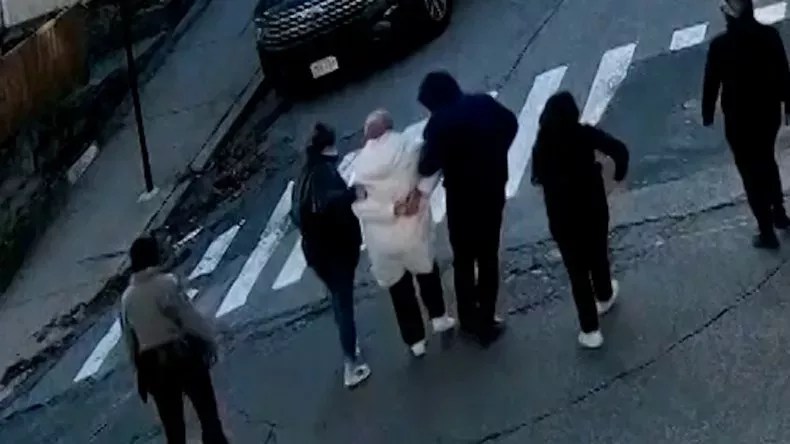
My game changer was Rumeysa Ozturk being swept off the sidewalk by government thugs. For me, it marked the difference between living under a wanna-be authoritarian regime and an actual authoritarian regime. People are being disappeared. (Here’s a United States Disappeared Tracker, made by data and public policy expert Danielle Harlow.) While there is no fine-line distinction between government and politics, I feel my concerns are more governmental than political. Some of the government’s main authoritarian efforts are directly impacting my professional community. Not talking about it doesn’t seem like an option to me.

As I look at professional conversations online, especially toward empowered individuals in higher education, I don’t see much talk about the government’s authoritarian efforts. This is disheartening. I must be looking toward academic elites for the same reason the Trump administration seeks to compromise them – because they have status and power in our culture. Their choices set an example for other institutions, organizations, and individuals. 

To the lack of vigorous protest from academic elites: On one hand, I’m happy to see that we are not all abandoning our posts, so to speak. Academics are still posting about their areas of specialty. This is one element of a healthy response. We have to keep doing the things we do well –  we have to maintain them. It keeps us grounded. Our knowledge and skill are the nuts and bolts that hold the structure and purpose of academia together. Otherwise, we are prone to becoming just another gust of wind in a chaotic storm, just another reaction for someone else to react to.

We also need to speak up loud and clear for fundamental, constitutional rights, and in defense of academic employees, especially students! 

It is going to be a tough four years. Take a moment to accept that. Let it sink in. Yes, it’s awful. But it’s also finite. And as Trump increasingly talks seriously about a third term, keeping it to four rough years depends on us standing up together.

On top of students being abducted, professors are losing their jobs. More will lose their jobs. We will have to take care of each other, and find our way through it. The alternative is complicity in undermining and degrading our institutions, our students, this nation, and ourselves. 

The Trump administration’s playbook is to invite you down the road of degradation with the most inviting baby-steps, which they will try to frame as reasonable. But once you start down that path, it becomes increasingly difficult to turn around. 

The degrading challenge sounds like this to me: 

I hear you value democracy, free thinking, internationalism, diversity, equity, inclusion, and the free exchange of ideas? How nice. People think we are so different! But I know better, we have so much in common. The important stuff. You and I… we have status and wealth. That’s the real team we are on. -The rich, the important, the successful. And, with the power of the US government, when I force you to choose between your democratic principles or staying with our team, on the side of status and wealth – I know you, and I know what you will choose. 

And the degradation begins.

I support anyone who wants to speak up and act up in support of any of our brothers and sisters who have been abducted, assaulted, and disappeared. For me, it makes sense to respond locally. I am speaking up for Rumeysa Ozturk, the Tufts University child study and human development doctoral student abducted by government thugs for contributing to a thoughtful opinion piece published in the university newspaper.

Furthermore, speaking of degradation, the Trump administration is using the genocide of Palestinians to degrade all Americans. That is part of the reason they are choosing this wedge issue to attack University campuses. -To stoke division, confusion, and distress. If we won’t speak up clearly against the murder, displacement, and starvation of Palestinians – the death toll now greater than 50,000 – they will know they have degraded us sufficiently to not speak up for anyone.

Special Education Staffing Shortage Featured on Morning Edition Today

A first step to increasing staff retention is simply keeping data regarding injuries and dangerous and destructive episodes.

Here’s the special education hiring pitch: The job pays poorly, is dangerous in many cases, you will be under intense scrutiny, with the specter of legal complications always hovering.

Especially given that unemployment levels are generally low, you can see why it is nearly impossible to staff a school appropriately. In the big picture, this all reflects badly on our values as a society

This report out of Texas on Morning Edition today is about staff injuries in special education. The consequences of the report’s central story are extreme, but the circumstances and the state of special education programming described are very familiar here in Massachusetts and across the country.

What I usually find in special education programs serving students with significant social, emotional, and behavioral challenges is that the school does not keep information on staff injuries.

There are several disincentives for keeping information about staff injuries. Administration is not well-motivated because any record of injuries doesn’t look good for them. -Similar for special education teachers in leadership positions. At the bottom of the staff power structure, the teaching assistants most frequently getting injured are often in a situation where it feels as if getting injured is their own fault, and/or their job.

It takes leadership willing to forcefully buck these trends and disincentives, and establish data tracking for staff injuries as well as dangerous and destructive episodes. It’s so important to keep this data, for reasons beyond the obvious benefits of having the information. What is even more directly helpful about tracking staff injuries and dangerous and destructive episodes is it goes a long way toward preventing a program culture where injuries and dangerous and destructive episodes become normalized. This normalization should never occur but often does, and it is very harmful to the education and development of the students being served, as well as everyone in the program community.

Also complicating matters are the poorly understood and sometimes incoherent laws and regulations regarding how to respond to students posing a safety threat to themselves or others. I have tried and failed to engage the Massachusetts Department of Elementary and Secondary Education to understand their process for updating the laws and regulations.

I have written about safety concerns quite a bit in my blog, and in my book with Laura Balogh, The Therapeutic Inclusion Program.

Therapeutic Program Community: Where Is Everybody?

This is the last in a series of 10 opinion articles about inclusion and mental health in schools.


By my estimation, there are thousands of programs in school districts across the United States for students with significant social, emotional, and behavioral challenges. Many programs are segregated from general education, while others practice inclusion models. Due to budget imperatives and least restrictive environment rules, this has been true for many years. These programs exist internationally as well, which is even more difficult to enumerate.

Laura Balogh and I had significant experience to draw on when we were tasked with designing a new therapeutic inclusion program in 2019. On top of our experience, we looked for published resources we could use to draw inspiration and to reference in support of our ideas.

But, having looked for relevant resources before, I knew there were very few. The lack of professional discourse about our work was, and continues to be, a subject of great puzzlement for me. In the early days of our program Laura and I decided to write The Therapeutic Inclusion Program so that there would be at least one reference specific to therapeutic inclusion programming for others to use, and hopefully prompt further conversation and writing in the community.

So, where is everybody? I have found I am more likely to meet and have a conversation with someone who works in a therapeutic education program at a random event like a concert than I am in seeking professional exchanges online.

There are vibrant and active professional communities and conversations around psychology, and education, taking place online and in the publishing world. Why is it that in these same arenas, people do not want to talk about the important work of educating students with significant social, emotional, and behavioral challenges?

The work of inclusive therapeutic education is endlessly interesting and deeply important. Furthermore, significant budgetary resources are at stake. To me, these factors and others indicate that inclusive therapeutic education is well worth talking about, and in fact needs to be talked about. 

The work of inclusive education for this group of students is deeply interesting. In school, our students must grow their way through academics, social demands/opportunities, their orientation toward authority, and that’s just scratching the surface. The challenges and opportunities of being employed in inclusive therapeutic education are no less dynamic and interesting. 

The work of educating students with significant social, emotional, and behavioral challenges could hardly be more important! In our roles as inclusive educators we have a tremendous and exciting opportunity to have a positive impact on students and families that are struggling. This opportunity has always been the most energizing part for me. We meet students and families at a critical juncture in their lives, where it is possible through our work to support a more positive trajectory. The impact of our efforts potentially resonate far into the future. The work is as rewarding as it is challenging, and well suited to those of us who thrive under these conditions with the right support. 

Regarding the budgetary concerns, school districts are spending a lot of money on out-of-district placements, and in-district programming for our population of students. The expense of out-of-district-placements, in Massachusetts for example, easily average over $100,000 per year, per student (Murray & Balogh, 2023, p.136). Creating programming in-district is also expensive, as far as hiring and maintaining staff. The well-being of program children, staff, and families are more than enough reason for robust professional conversation. However, if anyone needs something more measurable, how about dollars? While districts spend big money on programming for students with significant social, emotional, and behavioral challenges, they have almost no idea and very few resources to draw on regarding what actually works.

We need to talk about what works and what doesn’t seem to work in inclusive education for students with significant social, emotional, and behavioral challenges. What should we measure? What is the value of our measures? And, what is immeasurable? Like any arena of work, we should be developing and revising best practices in robust conversation in person, online, and in published material. 

Tell me, what do you think?

References 
Murray, M.A. & Balogh, L. (2023) The therapeutic inclusion program: Establishment and maintenance in public schools. Routledge.

The Importance of “We’re All In This Together”

When you hear “that’s not in my job description” it’s a discouraging indication regarding staff morale and staff’s ability to work as a team.

I’m writing from a place centered on inclusive school programming for students with significant social, emotional, and behavioral difficulties. These programs are sometimes called “therapeutic programs.”

What our students need most from staff is reliability and adults who work together. The best way to provide this dependably is through the overlap of staff functions. When the abilities of staff members largely overlap, a resilient and flexible net is created, with the security provided by redundancy. By “redundancy” I mean that if one staff member is out sick or otherwise unavailable, other staff members are capable of doing the same work.

I visualize this as overlapping circles of ability and responsibility. This is what we want, as opposed to unique staff abilities and responsibility gaps that make a program rigid and unreliable.

So, what does healthy staff overlap look like in more specific school situations? Here’s a concrete example of what I mean: If a therapeutic program has a counselor and a special education teacher, the special education teacher will be doing plenty of counseling, and the counselor will be educating. They will often work side by side. I advocate for referring to them both as “therapeutic educators.” 

Naturally, over the course of their time and experience, they will both become better teachers and counselors. We should continue to respect their individual expertise and leadership within their unique roles, while adopting a flexible approach toward responding to the needs presented by the students.

Supervision is an important part of the program model I advocate for, which is an essential support to anyone doing therapeutic work – counselor, teacher, and paraprofessional included.

Similarly, when therapeutic program staff supports inclusion in a general education classroom, the ‘all in this together’ mentality makes all the difference. The general education teacher is responsible for educating all the students in the room. The therapeutic program staff member is responsible for providing needed support and accommodations to program students so that the general education teacher can deliver instruction.

Without losing sight of these clear priorities, there is room for overlap and flexibility, making for a much richer and more collaborative experience. The therapeutic program staff member can be supportive of the entire classroom. If the general education teacher and therapeutic program staff member are both sufficiently skilled they may trade roles at times, with the general education teacher providing specialized support while the program staff member holds and teaches the classroom group. In practice, this can be quite fluid. (If you’ve ever played basketball, it’s a lot like switching your defense assignment on the fly in person-to-person defense.)

Every staff member in the school is ultimately responsible for doing what they can to make the whole school function the best that it can. This mindset mutually supports the inclusive mindset we must have with the students. Alternately, when program staff has a siloed mindset, the program students experience siloing as well.

As a staff member of a therapeutic program, helping students and staff during the random opportunities that come up in a school day supports your prime responsibility of helping your program students receive non-stigmatizing, appropriate, inclusive education. I suggest seizing any opportunity that doesn’t actively interfere with your ability to attend to your primary responsibilities. 

As far as your job description/contract goes – I do think it’s important to maintain your lunches and preps, and to keep your work within your paid hours. That is part of avoiding burnout, staying with the work long-term, and building program stability.

When you’re ‘on the clock’, and not in your prep or lunch times, just do whatever you can to help the school. It will pay off in a better experience for your students and your school community.

References
Murray, M.A. & Balogh, L. (2023) The therapeutic inclusion program: Establishment and maintenance in public schools. Routledge.