Higher Ed: Your Students are Being Abducted and We All Need to Hear From You!

I’ve spent a lot of time in schools -between attending plenty of school, working in schools K-12, and teaching graduate students. Also, I have a lot of friends and social media connections in education and higher education. Like many professionals, especially those working directly with patients in therapy, I’ve mostly kept my politics out of my professional public presence. 

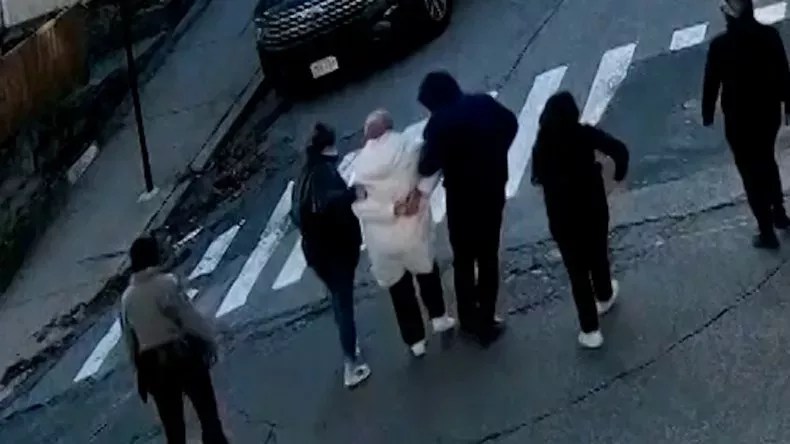
My game changer was Rumeysa Ozturk being swept off the sidewalk by government thugs. For me, it marked the difference between living under a wanna-be authoritarian regime and an actual authoritarian regime. People are being disappeared. (Here’s a United States Disappeared Tracker, made by data and public policy expert Danielle Harlow.) While there is no fine-line distinction between government and politics, I feel my concerns are more governmental than political. Some of the government’s main authoritarian efforts are directly impacting my professional community. Not talking about it doesn’t seem like an option to me.

As I look at professional conversations online, especially toward empowered individuals in higher education, I don’t see much talk about the government’s authoritarian efforts. This is disheartening. I must be looking toward academic elites for the same reason the Trump administration seeks to compromise them – because they have status and power in our culture. Their choices set an example for other institutions, organizations, and individuals. 

To the lack of vigorous protest from academic elites: On one hand, I’m happy to see that we are not all abandoning our posts, so to speak. Academics are still posting about their areas of specialty. This is one element of a healthy response. We have to keep doing the things we do well –  we have to maintain them. It keeps us grounded. Our knowledge and skill are the nuts and bolts that hold the structure and purpose of academia together. Otherwise, we are prone to becoming just another gust of wind in a chaotic storm, just another reaction for someone else to react to.

We also need to speak up loud and clear for fundamental, constitutional rights, and in defense of academic employees, especially students! 

It is going to be a tough four years. Take a moment to accept that. Let it sink in. Yes, it’s awful. But it’s also finite. And as Trump increasingly talks seriously about a third term, keeping it to four rough years depends on us standing up together.

On top of students being abducted, professors are losing their jobs. More will lose their jobs. We will have to take care of each other, and find our way through it. The alternative is complicity in undermining and degrading our institutions, our students, this nation, and ourselves. 

The Trump administration’s playbook is to invite you down the road of degradation with the most inviting baby-steps, which they will try to frame as reasonable. But once you start down that path, it becomes increasingly difficult to turn around. 

The degrading challenge sounds like this to me: 

I hear you value democracy, free thinking, internationalism, diversity, equity, inclusion, and the free exchange of ideas? How nice. People think we are so different! But I know better, we have so much in common. The important stuff. You and I… we have status and wealth. That’s the real team we are on. -The rich, the important, the successful. And, with the power of the US government, when I force you to choose between your democratic principles or staying with our team, on the side of status and wealth – I know you, and I know what you will choose. 

And the degradation begins.

I support anyone who wants to speak up and act up in support of any of our brothers and sisters who have been abducted, assaulted, and disappeared. For me, it makes sense to respond locally. I am speaking up for Rumeysa Ozturk, the Tufts University child study and human development doctoral student abducted by government thugs for contributing to a thoughtful opinion piece published in the university newspaper.

Furthermore, speaking of degradation, the Trump administration is using the genocide of Palestinians to degrade all Americans. That is part of the reason they are choosing this wedge issue to attack University campuses. -To stoke division, confusion, and distress. If we won’t speak up clearly against the murder, displacement, and starvation of Palestinians – the death toll now greater than 50,000 – they will know they have degraded us sufficiently to not speak up for anyone.
On the Recent Executive Order Regarding Education

I have read the January 29th, 2025 executive order titled “Ending Indoctrination in K-12 Schooling.”

It prints out at 10 pages. The image that comes to mind when I recall reading it is a firehose of mud. It is a mess that provides something for people supportive of the president’s agenda to work with, and therefore advances their cause. 

When people stand up to it in the courts, some judges might be sympathetic to the president’s assertions. 

Many judges will not be. 

It’s hot garbage. But that doesn’t mean it is unimportant or ineffective in advancing the admistration’s goals. It gives their odious ideas some foothold within the government. And even more significantly, it frightens a group of people who generally trend toward a rule-bound relationship with authority: teachers and administrators.

The executive order is filled with vague concepts. Here’s a snippet: “‘Patriotic education’ means a presentation of the history of America grounded in: an accurate, honest, unifying, inspiring, and ennobling characterization of America’s founding and foundational principles.” Most people capable of a little bit of thought would concede that there are aspects of the history of the U.S. and its founding that reflect these positive qualities, and aspects that most certainly do not. And therefore, there is no way to be accurate and honest without including the less ennobling parts of the United States’ history and founding. 

Furthermore, at what point could anyone determine with clarity that an educational approach is not sufficiently “grounded” in accuracy, honesty, unification, inspiration, and ennobling characterization, all at the same time? It would be nearly impossible to make such a determination. 

And this is but a snippet. When you analyze the text, it starts to make zero sense very quickly. 

The president’s power to declare these rules is very unclear. The proclamations are largely impossible to understand or implement. And, they likely run afoul of teachers’ and students’ First Amendment protections.

Adding yet another layer to the nonsense, the president’s administration is trying to simultaneously increase and decrease federal control of education. -One one hand insisting on these proclamations, on the other hand seeking to dismantle the very federal agency that exerts influence on education in the U.S.

I am firmly in the “do not comply in advance” camp, as recommended by Timothy Snyder in On Tyranny (2017).

This can be hard for some teachers, who run classrooms where rules and authority play a central role. What I say to teachers and administrators is: The president is not your supervisor. There may come a time when your actual supervisor gives you instructions that you don’t want to follow. At that point you will need to decide whether you will comply. That might be very difficult. You will confront that moment if it arrives. But again, I ask you not to comply with your anticipated ideas about what will be asked of you, in advance of that moment.

Anxiety is anticipation, and our power to anticipate is one of our great strengths as humans. But we start to lock ourselves in a miserable position when we behave as if events we anticipate with anxiety are already occurring. We must not do this to ourselves or our schools. And, if we are opposed to this attempt to limit the freedom and efficacy of teachers, we must not cede ground so easily.

References

Snyder, T. (2017). On tyranny: Twenty lessons from the twentieth century. Crown

Special Education Staffing Shortage Featured on Morning Edition Today

A first step to increasing staff retention is simply keeping data regarding injuries and dangerous and destructive episodes.

Here’s the special education hiring pitch: The job pays poorly, is dangerous in many cases, you will be under intense scrutiny, with the specter of legal complications always hovering.

Especially given that unemployment levels are generally low, you can see why it is nearly impossible to staff a school appropriately. In the big picture, this all reflects badly on our values as a society

This report out of Texas on Morning Edition today is about staff injuries in special education. The consequences of the report’s central story are extreme, but the circumstances and the state of special education programming described are very familiar here in Massachusetts and across the country.

What I usually find in special education programs serving students with significant social, emotional, and behavioral challenges is that the school does not keep information on staff injuries.

There are several disincentives for keeping information about staff injuries. Administration is not well-motivated because any record of injuries doesn’t look good for them. -Similar for special education teachers in leadership positions. At the bottom of the staff power structure, the teaching assistants most frequently getting injured are often in a situation where it feels as if getting injured is their own fault, and/or their job.

It takes leadership willing to forcefully buck these trends and disincentives, and establish data tracking for staff injuries as well as dangerous and destructive episodes. It’s so important to keep this data, for reasons beyond the obvious benefits of having the information. What is even more directly helpful about tracking staff injuries and dangerous and destructive episodes is it goes a long way toward preventing a program culture where injuries and dangerous and destructive episodes become normalized. This normalization should never occur but often does, and it is very harmful to the education and development of the students being served, as well as everyone in the program community.

Also complicating matters are the poorly understood and sometimes incoherent laws and regulations regarding how to respond to students posing a safety threat to themselves or others. I have tried and failed to engage the Massachusetts Department of Elementary and Secondary Education to understand their process for updating the laws and regulations.

I have written about safety concerns quite a bit in my blog, and in my book with Laura Balogh, The Therapeutic Inclusion Program.