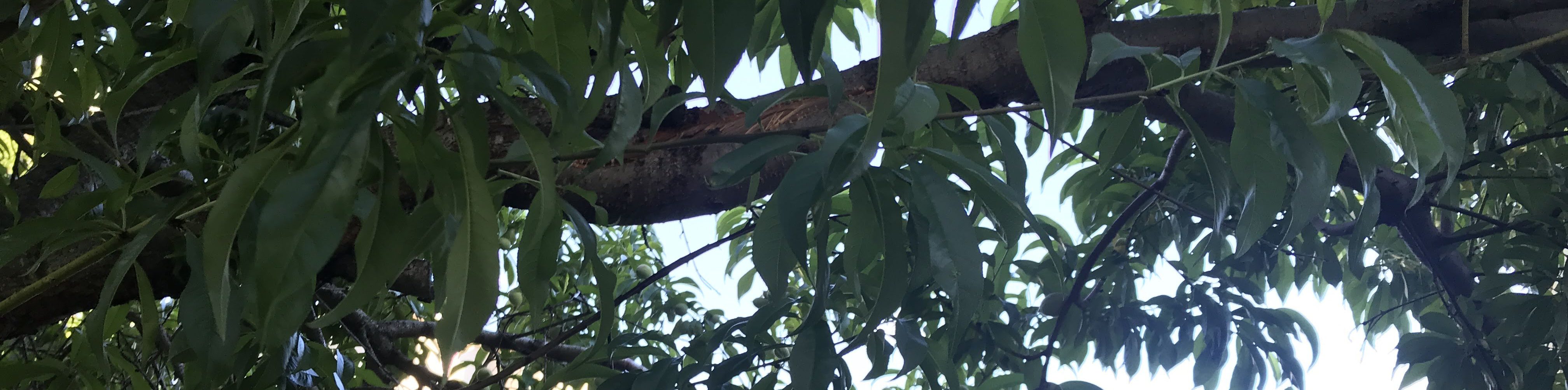
The Importance of “We’re All In This Together”

When you hear “that’s not in my job description” it’s a discouraging indication regarding staff morale and staff’s ability to work as a team.

I’m writing from a place centered on inclusive school programming for students with significant social, emotional, and behavioral difficulties. These programs are sometimes called “therapeutic programs.”

What our students need most from staff is reliability and adults who work together. The best way to provide this dependably is through the overlap of staff functions. When the abilities of staff members largely overlap, a resilient and flexible net is created, with the security provided by redundancy. By “redundancy” I mean that if one staff member is out sick or otherwise unavailable, other staff members are capable of doing the same work.

I visualize this as overlapping circles of ability and responsibility. This is what we want, as opposed to unique staff abilities and responsibility gaps that make a program rigid and unreliable.

So, what does healthy staff overlap look like in more specific school situations? Here’s a concrete example of what I mean: If a therapeutic program has a counselor and a special education teacher, the special education teacher will be doing plenty of counseling, and the counselor will be educating. They will often work side by side. I advocate for referring to them both as “therapeutic educators.” 

Naturally, over the course of their time and experience, they will both become better teachers and counselors. We should continue to respect their individual expertise and leadership within their unique roles, while adopting a flexible approach toward responding to the needs presented by the students.

Supervision is an important part of the program model I advocate for, which is an essential support to anyone doing therapeutic work – counselor, teacher, and paraprofessional included.

Similarly, when therapeutic program staff supports inclusion in a general education classroom, the ‘all in this together’ mentality makes all the difference. The general education teacher is responsible for educating all the students in the room. The therapeutic program staff member is responsible for providing needed support and accommodations to program students so that the general education teacher can deliver instruction.

Without losing sight of these clear priorities, there is room for overlap and flexibility, making for a much richer and more collaborative experience. The therapeutic program staff member can be supportive of the entire classroom. If the general education teacher and therapeutic program staff member are both sufficiently skilled they may trade roles at times, with the general education teacher providing specialized support while the program staff member holds and teaches the classroom group. In practice, this can be quite fluid. (If you’ve ever played basketball, it’s a lot like switching your defense assignment on the fly in person-to-person defense.)

Every staff member in the school is ultimately responsible for doing what they can to make the whole school function the best that it can. This mindset mutually supports the inclusive mindset we must have with the students. Alternately, when program staff has a siloed mindset, the program students experience siloing as well.

As a staff member of a therapeutic program, helping students and staff during the random opportunities that come up in a school day supports your prime responsibility of helping your program students receive non-stigmatizing, appropriate, inclusive education. I suggest seizing any opportunity that doesn’t actively interfere with your ability to attend to your primary responsibilities. 

As far as your job description/contract goes – I do think it’s important to maintain your lunches and preps, and to keep your work within your paid hours. That is part of avoiding burnout, staying with the work long-term, and building program stability.

When you’re ‘on the clock’, and not in your prep or lunch times, just do whatever you can to help the school. It will pay off in a better experience for your students and your school community.

References
Murray, M.A. & Balogh, L. (2023) The therapeutic inclusion program: Establishment and maintenance in public schools. Routledge.

New group psychotherapy offering

I have a new group psychotherapy offering.

Group psychotherapy is an extremely valuable, rewarding, and powerful therapy modality. Depending on the individual, it can be an alternative or complement to individual therapy.

Details:

-in person: Porter Square in Cambridge

-Thursdays 10am – 11:15am

-Begins on Thursday September 5th

-It will be a general adult interpersonal group

-Fee will be $80 per session. There will also be two individual sessions to determine fit and prepare for the group. I will not be accepting insurance for group, though I will provide you with invoices to submit to your insurer upon request. If cost is prohibitive to receiving care, please let me know.

Contact me if you are interested, have questions, and feel free to send someone my way.

Process as Counterweight to Reactivity in Schools

A blog entry about why organization, structure, and process is so important – without mention of Tolkien’s ents. 

Think of process as the antidote to reactivity. 

Reactivity is always available. It doesn’t require any planning or preparation. The student’s habitual stress response is set off. They act out. This sets off the teacher’s habitual stress response. The teacher’s reaction could be an in-the-moment response that they later regret. Or, maybe their reaction is deciding that this student simply can’t be educated in this setting.

A meeting is called. -Teachers, counselors, and administrators gather in some combination. The gathering is a reaction, so the reactivity continues.

This is meeting student reactivity with staff reactivity. This is the opposite of meeting reactivity with process. Reactivity is logistically easy, emotionally difficult, and ineffective at improving any student’s or teacher’s school experience.

Process receives reactivity and slows it down. Process moves at its own pace. The process receives the intense initial distress, slows it down, and disperses it amongst the collaborative adult team. Reactivity arrives at any time, and this uncertainty fuels anxiety. Process is predictable, and your staff’s consistency will earn a sense of security.

What does process look like? 

Process in this context consists primarily of three things:

  1. Regular, scheduled meetings.
  2. Clear expectations about communication.
  3. Clear decision-making processes.

We do see some of these structures taking root in school districts, with regular data meetings and processes for determining interventions for students. However, I don’t reliably see these structures where they are needed most – in programs designed to support students with significant social, emotional, and behavioral challenges.

The elements listed above are all worth talking about at length and in detail. Here, I will touch upon each very briefly.

Regular, scheduled meetings – These dictate the pace. Knowing there is a regular time to discuss and sort out challenges has a tremendous stabilizing effect on the staff. A staff member may be in a reactive space and feel that an issue needs to be resolved right away. With a dependable meeting time, -say, on a Tuesday – they will just have to hold tight until Tuesday, when everyone will get together and talk about the issue along with other concerns. In the meantime, everyone involved has a little time to stop, think, and adjust to the pace of the process.

Clear expectations about communication – The way that information is shared should be routine, clear, and understood by everyone on staff. There should not be any guesswork in determining whether and whom to share information with. Leaving these routines and expectations unclear is a recipe for interpersonal trouble. A lack of clarity adds extra burdens on staff who must not only confront a difficult situation, but also figure out whether, and whom with, to share information about it.

Clear decision-making processes – Disagreement among staff is inevitable. Disagreement among staff is also functional. A staff in constant agreement is not much use to each other in terms of deepening understanding, seeing from multiple perspectives, and rich collaboration. But disagreement is also uncomfortable. We have varying degrees of tolerance for it. Having a process for decision-making is a relief to interpersonal discomfort. When everyone has had a chance to say their piece and the conversation has stopped developing, we can move on to the decision-making process, and then on to the next concern.

Reactivity lives at the core of human nature while establishing and maintaining these structures and processes goes against some basic human tendencies, and there lies the challenge.

If we meet regularly, we will have more difficult conversations and disagreements. People tend to avoid difficult conversations and disagreements. So, many people would prefer not to meet. You may find that meetings are regularly missed, and people start to arrive late, or that meetings end early. If someone does not assume the role of maintaining the meeting and holding expectations about attendance and timeliness, these phenomena will almost certainly develop.

Similarly, staff may avoid communicating about something that they know will be contentious and difficult to talk about. The temptation may be to keep it to one’s self, or to tell only the most sympathetic ear. And lastly, people don’t naturally rely on established processes to make decisions. People tend to revert to more habitual and less organized group patterns, and groups often get stuck there.

The effort required to establish and maintain organized processes is worthwhile. Regular meetings and processes will provide practice in confronting challenges and lead to a greater sense of predictability and security, which will reduce anxiety. This predictability and increased security will infuse the staff’s work with students, and create a better learning environment. It will also decrease staff burnout and turnover, greatly benefiting program staff and students.

Be a Tolkien Ent: Responsiveness vs. Reactivity in Education and School Counseling

Our students are reactive. As educators we are called upon – not to be reactive, but to be responsive. 

A responsive educator posture doesn’t always come naturally, especially when we are confronted with the reactive crisis-sense of a student, or a staff member for that matter. The sense of emergency is contagious. We are deeply attuned to it as fellow humans. Much in the same way that people will react to a snake before they are even consciously aware that they have seen one, we will react to others’ sense of crisis and emergency before we’ve paused to think about the nature of the issue. It is a healthy group survival response, but it is not conducive to developing self-regulation and maintaining a learning environment.

Deliberate responsiveness is the term I use to describe process-oriented, attuned, and thoughtful responsiveness. It is an over-arching theme to nearly everything I advocate for at the intersection of education and mental health. It requires significant practical planning and conceptual reframing to maintain a responsive position. Dr. Jacob Ham describes “learning brain vs. survival brain” in this popular video. To maintain conditions that support students being in learning brain, the adult staff group has to maintain its own collective version of learning brain.

Tolkien provides us with a fantastic and clear example of this with the behavior of the ents -Middle-Earth’s tree-like giants. Tolkien’s ents serve as a model of practicing deliberate responsiveness.

In Tolkien’s Lord of the Rings, Frodo’s companions Merry and Pippin find themselves on a side quest recruiting reinforcements for the battle against Saruman’s armies.

They have the good fortune to encounter Fangorn, a tree-like giant. A battle is brewing, and Merry and Pippin’s compatriots are vastly outnumbered. They entreat the powerful Fangorn to help them in battle and to recruit more ents. Fangorn listens carefully, sometimes responding “Now don’t be hasty.”

Fangorn listens and explains at a pace we might associate with “mindful eating.” After much of this slow listening and explaining, he agrees to consider the hobbits’ request. However, he is not going to consider such an important question on his own. He calls a meeting (an entmoot) to consult and decide along with other ents. By using this special name, entmoot, Tolkien signals that this is an established process, not a reaction. The entmoot goes on for three days before they reach a conclusion. 

When reactivity meets process, everything slows down, and crisis-energy is dissipated. 

Tolkien was really on to something, both about human nature and the nature of trees. Real trees live for hundreds of years. They have a system akin to the human nervous system, though one difference is speed. Their electrical signals travel at the slow rate of one inch every three seconds (Wohlleben, 2105, p. 8). Peter Wohlleben’s popular The Hidden Life of Trees describes tree behavior, including their ability to communicate with each other through the air and fungal networks underground. Between their long lives and their rates of internal and external communication, trees are on a very different time scale than humans. Trees are active, but so slow relative to us as to be unrecognizable without special attention and effort.

As educators and school counselors, we can learn from trees and from Tolkien’s ents. Our students will turn to us reactively, frustratedly, and as desperate as Merry and Pippin begging Fangorn for assistance. We will likely feel activated to join them in their reactivity. But, we can strive to be as different from our students in our response as ents are from hobbits, and as different as trees are from people. 

We can welcome the student’s crisis into the safe, secure, and slow speed of thoughtful adult consideration. We can listen, long and engaged, like Fangorn. We can even use his “hm, hoom” sounds of considered acknowledgment. We can stop and think. And we can tell our students that we will continue to think about the issue they have presented, and we will consult with the other school staff about such a significant challenge. And yes, it may take a while to give this all the thought, consideration, and collaboration it deserves. But, like Fangorn again, we will dependably follow up and follow through.

References 

Tolkien, J. R. R. (1954). The two towers: the lord of the rings part two. Ballantine

Wohlleben, P. (2015). The hidden life of trees; What they feel, how they communicate. Greystone

Informing Students About Observations: My Unpopular Opinion

Here’s my unpopular opinion: Students of any age in schools should be notified about formal observations. 

Student observations are a common and important evaluation method in special education. Observations are part of nearly every initial special education evaluation process, as well as many other processes including general progress measurement, re-evals, and as part of placement considerations.

My opinion rests on a few fundamental beliefs:

It is respectful and ethical to inform any person that they are being observed. It is a gesture of respect that most people would appreciate, regardless of whether they are minors.

It is best to maintain a classroom where any and every visitor is identified. A classroom, even a large classroom, is a defined and close group that spends an enormous amount of time together. All non-members who enter the space are noticed by most of the students. -And some students wonder, speculate, and worry about the purpose and intentions of visitors. All the members of the classroom group deserve an introduction of visitors and a brief explanation of their purpose. In my classroom, the student being observed will be aware of the specific purpose of the visitor. Depending on circumstances and the privacy preferences of that student and their parents, it may be appropriate to tell the class that the visitor is here to “see the classroom”. -A truth that respects privacy concerns.

The third fundamental belief I will share is a bit more complex to explain. I often hear the concern that knowledge of the observation might impact the student’s performance during the observation. This is true. We can’t easily measure or correct for the impact of knowledge of the observation on the student’s performance. But we also can’t easily measure or correct for the impact of having an unusual and unexplained person in the room observing. Given these two possibilities, I’d much rather choose the option in which people receive respectful communication.

In research involving minors, the relevant concepts are informed consent and informed assent. In research, it is best practice to obtain informed assent from minors along with informed consent from their guardians. In some cases researchers record the minor’s informed dissent along with their guardian’s informed consent. School observations should be treated with the same respect. A student’s dissent to being observed is valuable information to record in one’s observation, should it go forward.

I recommend informing the student about any upcoming observation some days in advance, and reminding them about it each day leading up to the observation. If the observer is unfamiliar to the student and there is an opportunity to have an introduction before the day of observation, I would recommend that as well. If that is not possible, sharing a picture of the observer will help decrease the uncertainty. I recommend that you simply treat the student with at least the same respect that we understand most people would appreciate being treated with under similar circumstances.